
The Cost of Waiting Out One More Storm
Atlantic hurricane season doesn't wrap up until the end of November, which means Myakka City homeowners who put off garage door prep in October are gambling on borrowed time. Skip it, and the risk isn't cosmetic. A garage door that buckles under wind pressure doesn't just leave a gap in your home's shell — it can let enough air pressure inside to blow out the roof deck or push walls outward from the inside. Insurance adjusters see this pattern often enough that wind-load compliance for garage doors is standard in building codes across coastal Florida for a reason. A door that fails costs far more than the door itself once you add roofing, drywall, insulation, and the contents of the garage soaked by wind-driven rain.
Why the Garage Door Takes the Hit First
Every other opening in a typical house — windows, entry doors — is small and heavily framed. The garage door is the largest opening in the structure, often 9 or 16 feet wide, held in place by thin aluminum or steel panels, a track system, and a handful of rollers and hinges. When sustained wind hits the front of a house, that door absorbs more total force than any other single component. If it flexes, bows, or pulls off its track, the pressure differential inside the garage has nowhere to go but up, which is exactly how homes lose roofs in storms that otherwise would have caused only minor damage.
This is also why older doors are a bigger liability here than in drier, calmer climates. Years of humidity and afternoon downpours swell wood-composite panels and corrode metal hardware, while salt air closer to the coast accelerates rust on springs, tracks, and fasteners. A door that looked fine last December can have hinges or rollers weakened enough by October that they're no longer rated for the wind load they handled when new.
Signs Your Door Won't Hold Up
- Visible flex when the door is closed and you push on a panel from outside
- Rust streaks at hinge points, track brackets, or along the bottom panel seam
- Gaps at the corners where the door doesn't sit flush against the frame
- Loose or wobbly track brackets, which let the door shift side to side under pressure
- An opener with no battery backup, leaving the door stuck open or shut if power fails mid-storm
- A door with no wind-load rating at all, common in homes built before current code requirements were in place
Concrete Steps to Take Before the Next System Forms
1. Check or Install Horizontal Bracing
Retrofit bracing kits reinforce the inside of each panel and can be added to many existing doors without full replacement. If your door already has factory bracing, confirm it's still securely fastened — not rusted through or loose from years of vibration.
2. Inspect Track and Roller Hardware
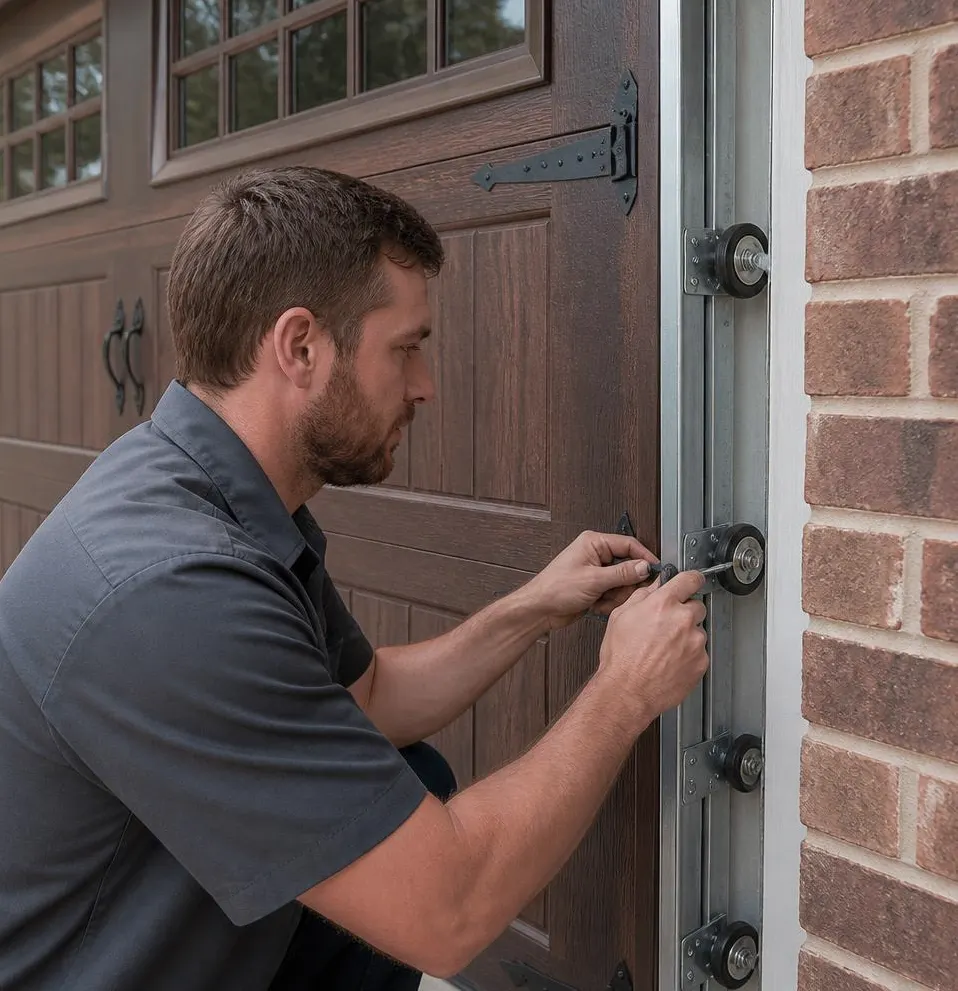
Tracks need to be plumb and tightly bolted; rollers should turn smoothly without grinding or visible pitting. Salt air and humidity eat through standard steel rollers faster than inland climates, so if yours look chalky or rust-streaked, replacing them before storm season peaks is cheaper than replacing a door that jumped its track.
3. Test the Auto-Reverse and Opener Backup
If your opener doesn't have a battery backup, add one. Power outages during tropical storms are common, and a door that can't close because it's stuck mid-track in an outage defeats every other precaution you've taken.
4. Consider an Impact-Rated or Wind-Load-Rated Replacement
If your current door predates current wind-load standards, or if it's original to an older home, replacement is worth pricing out. Wind-rated doors typically run higher than standard models — often in the $1,500–$3,500 range depending on size and material — but that's a fraction of the repair bill after a roof failure caused by a blown-in garage door.
5. Don't Forget the Weatherstripping and Bottom Seal
A cracked or missing bottom seal lets wind-driven rain pool inside the garage during the heavy afternoon downpours typical here, which adds moisture damage even when the door itself holds structurally. Replacing seals is inexpensive and takes an afternoon.
When to Call Myakka City Garage Door Pro
If you've noticed flex in the panels, rust on the hardware, or you simply don't know whether your current door meets wind-load requirements, that's the point to call in a technician rather than guess. Myakka City Garage Door Pro can run a full Garage Door Maintenance & Tune-Up to catch corrosion, loose hardware, and track misalignment before a storm puts stress on all of it at once. For doors that are undersized, outdated, or already showing storm damage from a prior season, our Garage Door Installation & Replacement service can get you into a properly rated door built for this climate, not a generic model that happens to fit the opening.
Storm season isn't finished with Myakka City yet this year. Call Myakka City Garage Door Pro today to get your door inspected and storm-ready before the next system is on the radar.