
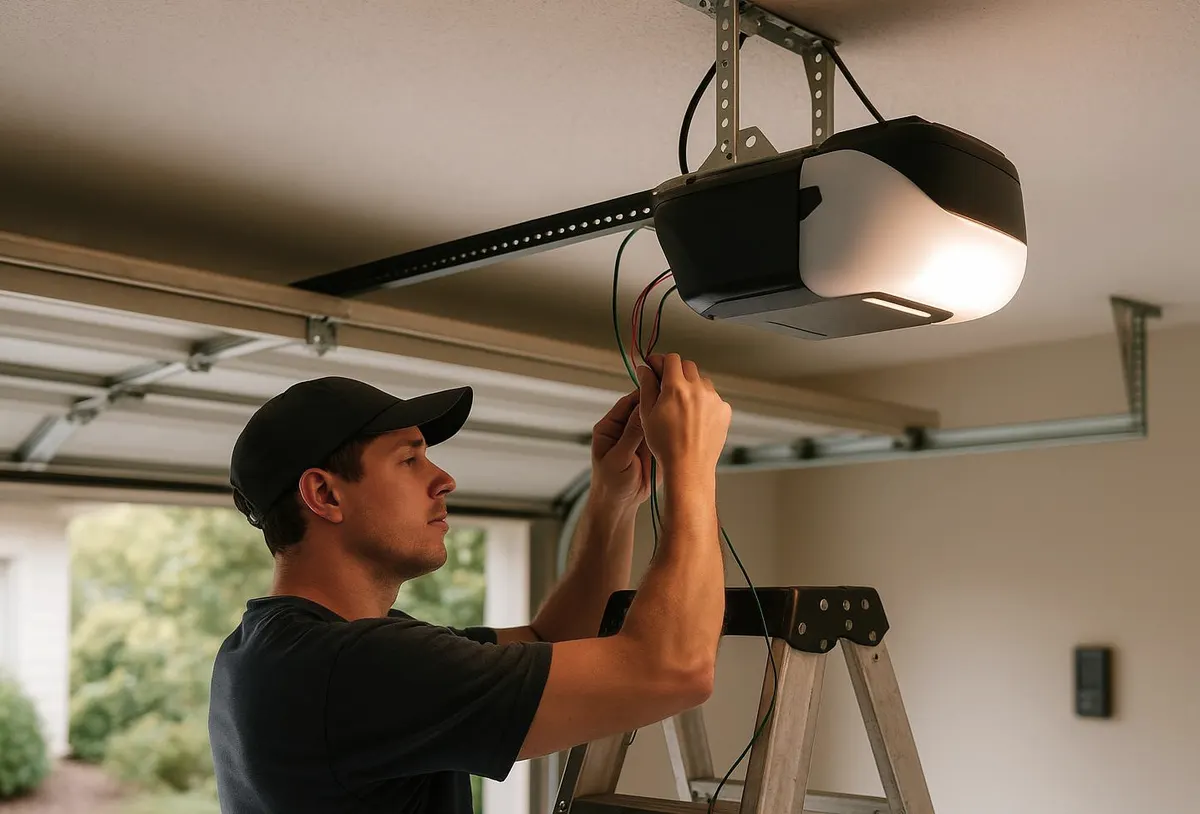
The Mistake Most People Make First
When a garage door starts closing, stops a foot or two from the ground, and reverses back up, almost everyone's first move is the same: they march over to the little sensor eyes near the bottom of the track and start messing with them. They nudge them, wipe them with a sleeve, sometimes unplug them entirely just to get the door to shut for the night. It's an understandable instinct — the sensors are visible, easy to reach, and most people have heard that "sensor problems" cause reversing. It feels like a five-minute fix.
The trouble is that in a lot of cases, the sensors are doing exactly what they're supposed to do: reporting a real problem somewhere else in the system. Randomly bending them into alignment, or disconnecting them so the door will close no matter what, can mask a bigger issue and turn a minor repair into a door that slams down on whatever (or whoever) happens to be underneath it. Before touching anything, it helps to know what the symptoms are actually pointing to.
What the Symptoms Usually Look Like
- Starts closing, stops, reverses to open: the door travels partway down, hesitates, then runs back up to the fully open position on its own.
- Won't close at all, no reversal: you press the button and the door either doesn't move, or it starts and immediately stops within an inch or two.
- Closes fine sometimes, not others: often tied to time of day, sun glare, or how recently it rained.
- Opener hums but door doesn't move: usually a different problem (motor or drive issue), worth separating from true reversing behavior.
What a Technician Checks, in Order
1. The Safety Sensors (Photo Eyes)
This is the first stop for good reason — it's the fastest to check and the most common culprit, especially here. After an afternoon downpour, humidity fogs the lenses, spiderwebs build across the beam path overnight, and pollen or dust settles on the glass. If either sensor's LED is blinking instead of steady, the beam is broken or misaligned.
The fix: wipe both lenses with a soft, dry cloth (no cleaners), check that both brackets are tight and pointed directly at each other, and clear anything — leaves, webs, a stray garden hose — from the beam line. If the brackets have been bumped or the bolts are loose, re-aiming them so both lights glow solid is usually all it takes.
2. Track Obstructions and Alignment
Next, a technician runs their eyes down both tracks looking for debris, dents, or sections that have pulled away from the wall. Humidity swelling in wood door jambs, or a stray impact from a mower or vehicle, can nudge a track just enough that rollers bind partway through the cycle — which the opener reads as resistance and reverses to protect the door and whatever's below it.
The fix here ranges from simply clearing debris and tightening track bolts, to straightening a mildly bent section, to full off-track repair if the rollers have jumped the rail.
3. Opener Limit and Force Settings
If the sensors are clean and the tracks are straight, the next check is the opener's travel limits and down-force setting. These tell the opener how far to travel and how much resistance to tolerate before reversing. If a door has swollen slightly from moisture, or the limit was set wrong during a previous repair, the opener may be stopping the door early or reversing at a point that used to be fine.
Adjusting this isn't just turning a dial higher until the door closes — cranking up the force to push through real resistance is how people end up with a door that closes on a car bumper or a pet. The right fix is finding out why resistance increased, then setting limits to match the door's actual travel.
4. Spring Tension and Door Balance
A door that's heavier than the opener expects will struggle to close smoothly, and the opener will often read that strain as an obstruction and reverse. Springs take a beating from the salt air and humidity common on this side of the state — rust and corrosion weaken the coils over time, even on doors that look fine from the outside.
A simple balance test tells the story: with the opener disconnected, a door lifted manually should stay roughly in place when let go around halfway up. If it drops, the springs are no longer doing their job. This isn't a DIY adjustment — torsion springs are under serious tension and need to be handled by someone with the right tools.
5. Rollers, Hinges, and Panel Swelling
Rusted rollers or hinges from months of humidity can cause uneven movement that trips the opener's resistance sensing, especially on one side of the door. Likewise, steel and composite panels can expand slightly in heat and moisture, changing how smoothly the door rides the track. Lubricating moving parts with a proper garage door lubricant (not a general-purpose spray) and replacing badly rusted hardware usually resolves this.
6. The Opener's Logic Board
If everything mechanical checks out clean, the last stop is the opener itself. Circuit boards in garages without climate control can take moisture damage over a humid season, leading to erratic reversing or random failure to close. At this point, it's often more cost-effective to replace the opener than to keep chasing a failing board.
When to Call Myakka City Garage Door Pro
If you've wiped the sensors, cleared the track, and the door still reverses or won't close, it's time for a proper diagnostic rather than more guesswork. We check the full list above in person — sensors, track alignment, opener settings, and spring balance — and can handle it on the spot, whether that's a Garage Door Spring Repair for corroded, out-of-balance springs or an Off Track Door Repair if a roller has jumped the rail. We also offer Garage Door Maintenance & Tune-Up visits that catch this kind of wear before it leaves you standing outside an open garage door at night.
If your garage door in Myakka City, FL is giving you trouble closing, call Myakka City Garage Door Pro for a same-week visit and a fix that actually holds.