
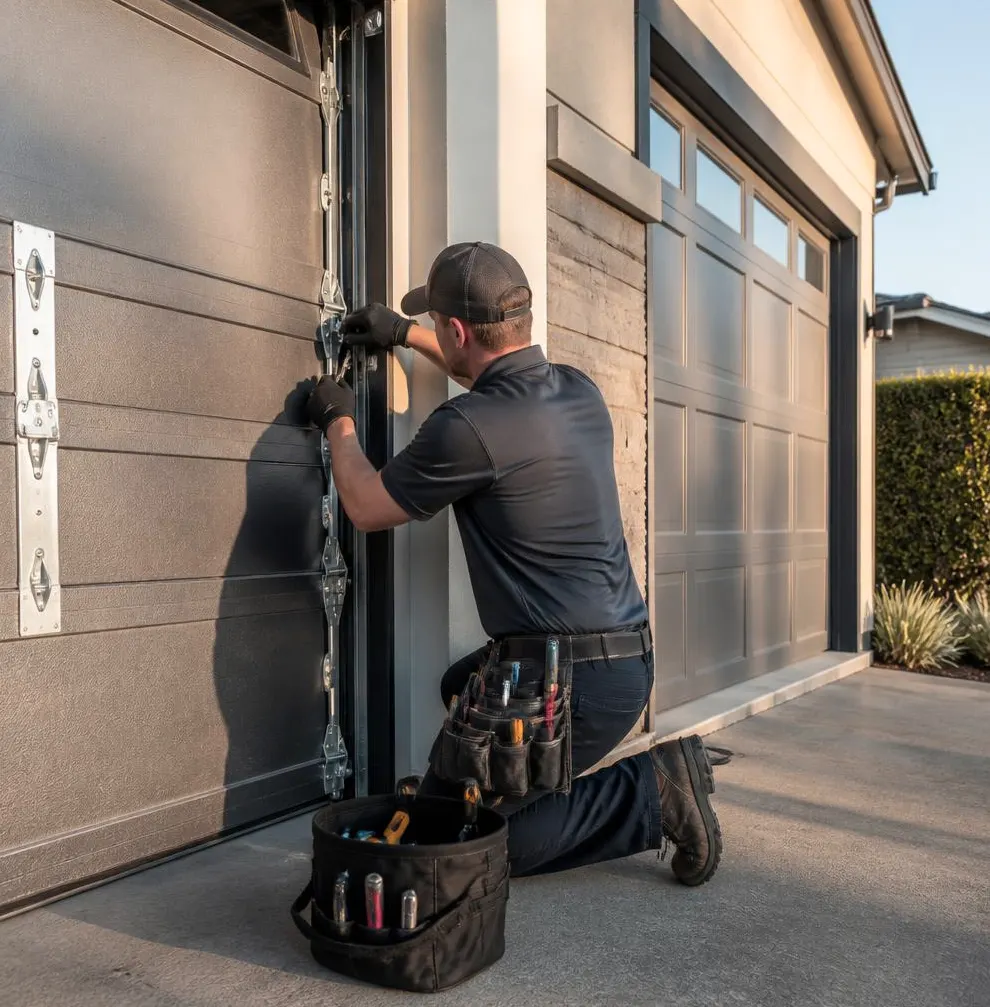
The Mistake: "We'll Just Pull the Red Cord"
Here's how the argument usually starts. One spouse says battery backup is unnecessary because there's already a manual release, that red cord hanging from the trolley. It's tempting logic: it's free, it's already installed, and it works every time you've tested it. Why pay more for a battery when you can just pull a cord?
The problem is what pulling that cord actually does. It disconnects the opener carriage from the door, which means the opener is no longer holding the door against the track the way it does when it's powered and engaged. During a calm afternoon, that's a non-issue, you lift the door, it stays up, you go about your day. During a wind event, it's a different story. A door that's manually disengaged isn't being held with the same consistent pressure a wind-rated system is designed around, and lifting a heavy insulated or reinforced door by hand while rain is blowing sideways is not a two-minute job. It's also not something you want to be doing in the dark, in standing water, with a storm still active outside.
So the manual release is a real feature and it has its place, but it's an emergency workaround, not a substitute for the door operating normally when the power blinks off for a few hours, which happens a lot more often here than during an actual hurricane.
What Battery Backup Actually Does
A battery backup system, whether it's built into the opener or added as a separate unit, sits there doing nothing until the power cuts out. The moment it senses an outage, it switches over automatically and lets the opener keep working almost exactly as before, same remote, same keypad, same wall button. You don't pull a cord, you don't lift anything, you just hit the button like normal.
It's not unlimited power. Most units are built to handle a set number of open/close cycles, often somewhere in the range of 10 to 20, before the battery needs recharging, and standby time before you even try to use it is usually a day or two. It also doesn't power anything else in the garage, just the opener itself. So it's not a whole-house solution, it's specifically there to keep the garage door usable during a short-to-medium outage.
Is It Required, or Just Smart to Have
Whether a battery backup is required depends on the specific opener model and what building code applies to your installation, that's not something to guess at or assume based on a neighbor's setup. What's true across the board is that many mid-tier and higher-tier openers from major brands now include it as a standard feature rather than an add-on, which tells you something about how common the expectation has become in storm-prone regions.
Practically speaking, here's the case for having it regardless of whether it's mandated: outages tied to afternoon downpours and storm season aren't rare events here, they're a seasonal pattern. If your garage door is also your main entry or exit, or if anyone in the house can't easily lift a heavy door by hand, the battery backup stops being a convenience and starts being the difference between getting your car out and being stuck.
The Trade-offs Nobody Mentions
Battery backup isn't free, and it's not maintenance-free either. A few things worth knowing before you declare victory in the argument either way:
- Cost: openers with integrated battery backup typically run higher than base models, and standalone backup battery accessories add their own cost on top of an existing opener.
- Battery life: these batteries don't last forever. Most need replacing every couple of years, sooner if they're sitting in a hot, humid garage, which describes most garages in this part of Florida for a good chunk of the year.
- Heat and moisture: sustained heat and humidity are hard on batteries generally, and salt air closer to the coast speeds up corrosion on terminals and connections. A battery that tested fine last year can fail silently if it hasn't been checked since.
- False confidence: having a backup battery that's dead or corroded is worse than knowing you don't have one, because you find out at the worst possible time.
How to Actually Settle This
Stop arguing from memory and go check. Pull up your opener's manual or look up the model number printed on the unit itself, most manufacturers list clearly whether that model includes integrated battery backup or supports an add-on. Then, on a dry afternoon with nothing urgent happening, unplug the opener at the outlet and try the remote. If the door cycles normally, you've got backup power and it's working. If it doesn't move, you either don't have one or it's dead, and now you know which argument to have next.
When to Call Myakka City Garage Door Pro
If you've tested your setup and found out you don't have battery backup, or that the one you have is old enough to be questionable, that's a straightforward fix through our Garage Door Opener Installation service, we can match you with an opener that includes integrated backup power suited to how your household actually uses the garage. If you're not sure whether your current opener and backup system are functioning the way they should, our Garage Door Maintenance & Tune-Up service includes checking the battery, the connections, and the cycle performance so you're not finding out it failed during the next outage.
If you're in Myakka City, Lakewood Ranch, Sarasota, Bradenton, or anywhere nearby and want a straight answer on whether your garage door opener is actually storm-ready, give Myakka City Garage Door Pro a call. We'll tell you what you have, what you don't, and what it would take to fix it.